- Home Page /
- Books /
- History /
- Americas /
- United States /
- Recording Oral History: A Guide for the Human...

Item #:
980187
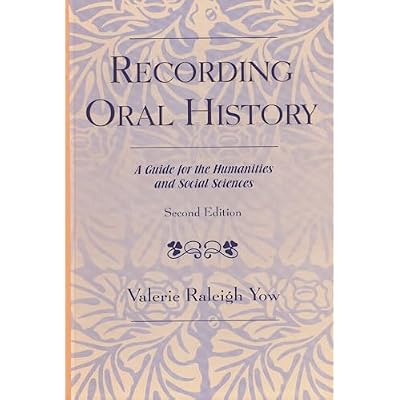
Recording Oral History: A Guide for the Humanities and Social Sciences Paperback April 7, 2005
Item #:
980187
XCD 93
Price Details
Excluding Shipping & Custom charges ( Shipping and custom charges will be calculated on checkout )
*All items will import from US
0 ratings
Write a review
In stock
 Imported from USA store
QTY:
Order now and get it around Wednesday, July 01
Secured transaction
Ubuy works hard to protect your security and privacy. Our advanced payment security system ensures confidentiality by encrypting your information during transmission using AES (Advanced Encryption Standards) and SSL (Secure Socket Layer) protocols. Your payment details are 100% secure as we do not share your payment details with third party sellers.
Our Top Logistics Partners


Recording Oral History is a scholarly and practical guide to the methods of oral history, essential for historians and social scientists.

Fast
Shipping

Free
Return*

Secure Packaging

100% Original Products

PCI DSS Compliance

ISO 27001 Certified


Note: Step Down Voltage Transformer required for using electronics products of US store (110-120). Recommended power converters Buy Now.


What Stands Out
Comprehensive Guide
This guide provides an extensive overview of oral history methods, ideal for humanities and social sciences students aiming to gain practical skills and theoretical knowledge in recording personal narratives.
Diverse Methodologies
The book covers a variety of interviewing techniques and analysis methods, equipping readers with diverse approaches to capture authentic stories and cultural experiences, enhancing research quality.
Practical Resources
Includes templates, case studies, and ethical considerations, making it a practical resource for researchers seeking to navigate the complexities of oral history fieldwork effectively.
Product Details
| Item Weight | 1 lbs (450 grams) |
Who Should Buy?

-
Students in Humanities
Ideal for students studying history, anthropology, or sociology who want practical guidance on conducting oral history interviews.
-
Professional Historians
Beneficial for historians looking to enhance their methodologies in gathering firsthand accounts and personal narratives effectively.
-
Community Archives
Useful for community archivists preserving cultural heritage through oral histories from local residents and historical figures.

-
Casual Readers
Not suitable for casual readers who are seeking entertainment rather than informative instructional content on oral history.
-
Non-Academic Users
Individuals outside academic or research contexts may not find practical value in the scholarly approach of this guide.
-
Technical Professionals
Professionals in technical fields may feel the guide lacks relevance for their specific needs concerning oral communication techniques.
Product Description
Recording Oral History: A Guide for the Humanities and Social Sciences Paperback April 7, 2005
Have any Query? Chat with us
Customer Questions & Answers
-
Question:
What topics are covered in Recording Oral History: A Guide for the Humanities and Social Sciences 2nd edition?
Answer: This edition covers a wide array of topics essential for anyone interested in oral history. It delves into methodologies for interviewing, ethical considerations, and the impact of technology on recording practices. Additionally, it discusses the importance of context and narrative in oral histories, offering insights into how to accurately capture and interpret personal stories. This guide is especially useful for students, researchers, and practitioners in the fields of humanities and social sciences who want to deepen their understanding of oral history and its applications. -
Question:
Who is the target audience for this book?
Answer: The primary audience for this book includes students, researchers, historians, and practitioners in the humanities and social sciences. It is designed for those looking to develop a comprehensive understanding of oral history practices, whether they are beginners or seasoned professionals. The book offers valuable insights and strategies applicable in diverse contexts, from academic research to community projects and personal storytelling endeavors. -
Question:
How does this edition differ from the first edition?
Answer: The second edition of Recording Oral History includes updated case studies, enhanced methodological discussions, and insights into the latest technological advancements in audio and video recording. It also reflects contemporary ethical considerations and explores the evolving role of oral history in social movements and cultural preservation. These updates make it a more relevant resource for current practitioners and scholars in the field. -
Question:
Can this guide help with conducting interviews?
Answer: Yes, this guide is an excellent resource for learning how to conduct effective interviews. It provides practical techniques for preparing questions, establishing rapport with interviewees, and navigating the complexities of personal narratives. The book’s advice is drawn from well-researched practices and is illustrated through examples, making it useful for both novice and experienced interviewers in various settings, from academic research to community projects. -
Question:
Is there a section on ethical considerations in oral history?
Answer: Absolutely, ethical considerations are a key focus in this guide. The authors emphasize the importance of consent, confidentiality, and the responsibilities of the interviewer in preserving the dignity and integrity of the interviewee's narrative. These discussions are crucial for anyone engaged in oral history work, ensuring that personal stories are handled with respect and mindfulness, which is particularly important in sensitive communities or topics. -
Question:
How does technology impact oral history recording according to this guide?
Answer: The guide discusses how modern technology has transformed the oral history field, facilitating more accessible and versatile recording methods. It highlights the use of digital audio and video recording tools that improve clarity and accessibility, as well as platforms for sharing oral histories. By leveraging these technologies, practitioners can enhance the quality of their interviews and broaden their reach, which is particularly useful in educational and archival settings. -
Question:
Are there practical examples included in the book?
Answer: Yes, the book includes numerous practical examples and case studies that illustrate successful oral history projects. These real-world applications provide readers with insights into the challenges and solutions faced by other practitioners. Such examples can inspire and guide users in designing their own oral history initiatives, whether in academic research, community engagement, or personal storytelling. -
Question:
What can I learn about preserving oral histories?
Answer: Readers can learn effective strategies for preserving oral histories in this guide. It covers techniques for archiving and organizing recorded interviews, as well as considerations for maintaining the accessibility of these materials over time. This is crucial for researchers and institutions dedicated to preserving cultural heritage, as it ensures that the voices captured in recordings can be accessed by future generations. -
Question:
Where can I buy Recording Oral History: A Guide for the Humanities and Social Sciences 2nd edition in Grenada?
Answer: You can purchase Recording Oral History: A Guide for the Humanities and Social Sciences 2nd edition through Ubuy in Grenada. Ubuy offers a wide selection of academic and professional resources, making it easy for you to find this guide for your oral history needs. -
Question:
Is the book suitable for beginners in oral history?
Answer: Yes, this book is highly suitable for beginners in oral history. It lays a solid foundation by introducing core concepts and methodologies in a clear and accessible manner. The authors provide guidance on practical techniques and ethical considerations, making it an invaluable resource for those just starting out in the field. Beginners can easily follow along and gain confidence as they begin their own oral history projects.
United States Editorial Review
**** The second edition of "Recording Oral History: A Guide for the Humanities and Social Sciences" by Valerie Yow continues to uphold the esteemed reputation of its predecessor, while deftly incorporating modern technological insights that enrich the foundational principles of oral history. The book speaks to a dual audience: both seasoned historians looking to deepen their expertise and general readers interested in exploring the nuances of oral history—though the latter may find certain sections challenging due to the advanced language and concepts presented. Yow's comprehensive approach spans crucial topics ranging from the mechanics of interviewing techniques, the psychological dimensions of memory, to the ethical Considerations that adhere to oral history work. This exhaustive guide not only serves as an instructional manual but also as a reservoir of invaluable references for both novices and experienced scholars in the field. The structured breakdown of chapters covers everything from preparing for interviews to the various types of oral history projects and the critical analysis of collected data. Readers have praised the book for its depth and breadth of information, particularly highlighting the extensive tips and guidelines on interviewing and the legal ramifications of historical documentation. However, some have noted that while it is informative, certain parts may become dense and require careful reading. Despite this, many Consider it an indispensable resource in the study of oral history, making it a popular recommendation among educators and students alike. **
Customer Reviews & Ratings
1 customers ratings
-
5 Star
100%
-
4 Star
0%
-
3 Star
0%
-
2 Star
0%
-
1 Star
0%
Review this product
Share your thoughts with other customers
Pros
- Comprehensive coverage of oral history topics.
- Integrates modern technologies relevant to the field.
- Practical tips and guidelines for interviewing and project completion.
- Extensive references to support further research.
- Valuable legal and ethical Considerations for oral historians.
- Highly recommended by both educators and students.
Cons
- Some advanced language may be inaccessible to beginners.
Product Price History
Important information
- Limitations : For products shipped internationally, please note that any manufacturer warranty may not be valid; manufacturer service options may not be available; product manuals, instructions, and safety warnings may not be in destination country languages; the products (and accompanying materials) may not be designed in accordance with destination country standards, specifications, and labeling requirements; and the products may not conform to destination country voltage and other electrical standards (requiring use of an adapter or converter if appropriate). The recipient is responsible for assuring that the product can be lawfully imported to the destination country. When ordering from Ubuy or its affiliates, the recipient is the importer of record and must comply with all laws and regulations of the destination country.
- Not all the products listed on Ubuy are for sale, as Ubuy is a global search engine. Products are subject to export/trade regulations.
XCD 93
Order now and get it around Wednesday, July 01
This item is not restrict in my country.(Please click on above link if this item is not restrict in your country, So our team will review and allow.)
QTY:
Secured transaction
Ubuy works hard to protect your security and privacy. Our advanced payment security system ensures confidentiality by encrypting your information during transmission using AES (Advanced Encryption Standards) and SSL (Secure Socket Layer) protocols. Your payment details are 100% secure as we do not share your payment details with third party sellers.
Our Top Logistics Partners
Fastest cross-border delivery
Features & Benefits
- Updated edition of a highly regarded classic in oral history.
- Includes new material on internet utilization and memory processes.
- Examines testimony and meaning interpretation in various contexts.
- Accessible style ideal for historians and social scientists.
- Suitable for students and researchers across multiple disciplines.
- A must-have resource for anyone engaged in oral history research.